Matthew Sanford
...
"Jo Zukovich is the
first and best yoga teacher I will ever have. Our work together over
the
last sixteen years has transformed me from a struggling, disembodied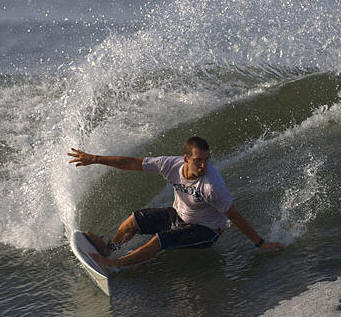 paraplegic graduate student to a yoga teacher, author, and founder
of a non-profit. This would not have happened had I not met Jo, had
I not encounter a caring, deeply committed, and profoundly creative
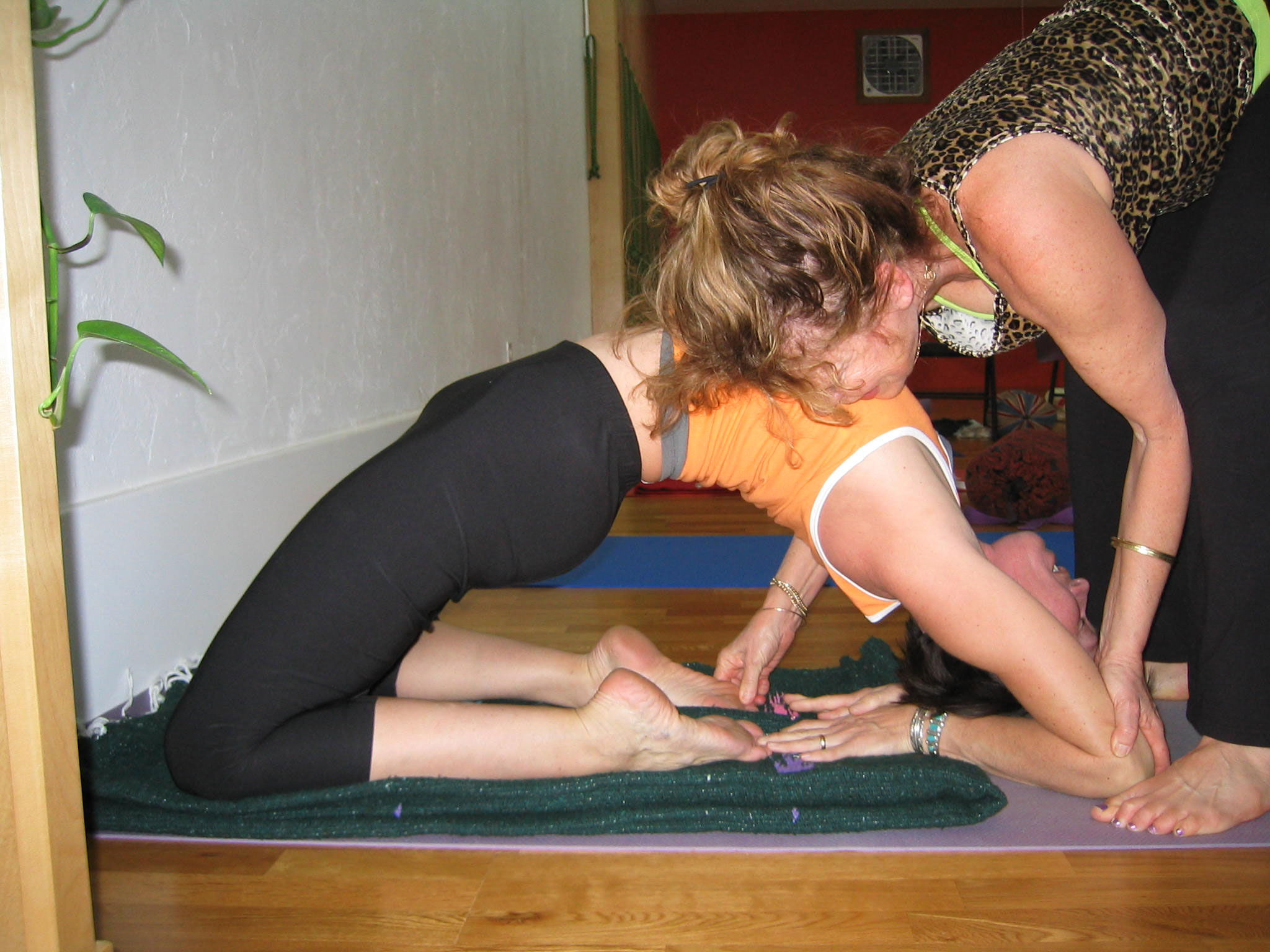
yoga teacher. Together we have explored how the principles of Iyengar yoga travel through my paralyzed body. This pioneering work
is now the foundation of our efforts to both make yoga more
accessible to people living with disabilities and to transform
current medical and rehabilitation practices."
paraplegic graduate student to a yoga teacher, author, and founder
of a non-profit. This would not have happened had I not met Jo, had
I not encounter a caring, deeply committed, and profoundly creative
yoga teacher. Together we have explored how the principles of Iyengar yoga travel through my paralyzed body. This pioneering work
is now the foundation of our efforts to both make yoga more
accessible to people living with disabilities and to transform
current medical and rehabilitation practices."
Matthew Sanford
Author of WAKING: A MEMOIR OF TRAUMA AND TRANSCENDENCE, and founder
of Mind Body Solutions.
www.matthewsanford.com
Greetings MBS Adaptive Yoga
Community Newsletter:
The true beginning of
Mind Body Solutions was the third Saturday in April, 1991, when Matt
met his teacher Jo Zukovich for the first time, 12 years after his
accident. What follows is their reflections on their initial yoga
session and the impact it has had on their lives....
Ode to Jo
by Matthew Sanford
I met a fantastic yoga
teacher the first time I tried. I got so lucky. Jo Zukovich
possessed extraordinary knowledge. She was thoughtful, considerate,
supportive, intuitive, and empathic. She met me person-to-person,
eye-to-eye. She made me feel – in my bones – that I belonged.
The relationship
between Jo and me is the intuitive cornerstone of Mind Body
Solutions. The dynamic I encountered – the nourishment, the
respect, the validation, the patience, and the support – created the
conditions for me to flourish. Despite all the things that I
“could not” do physically, her grace allowed me to fall in love with
yoga.
This wisdom is the
foundation of all that we have created at Mind Body Solutions. The
vision is simple. I hope that any student coming through our doors,
or coming to anyone we have trained, receives even a glimpse of what
I received when I met Jo. I want everyone to be as lucky as I.
Jo remembers:
When asked to write
something about some of my 1st meetings w/ Matt. I had a rush of
memories.... a very strong one is the moment we met.
I had just finished teaching a class and was kind of spent and not
sure about this private session I had set up w/Matt and then in
comes this smiling spark of life! I liked him immediately! We
chatted a bit about yoga and about how much or how little we thought
he could do. Then I asked him if he was willing to get on to the
floor, he was! I could tell he was a special person and very
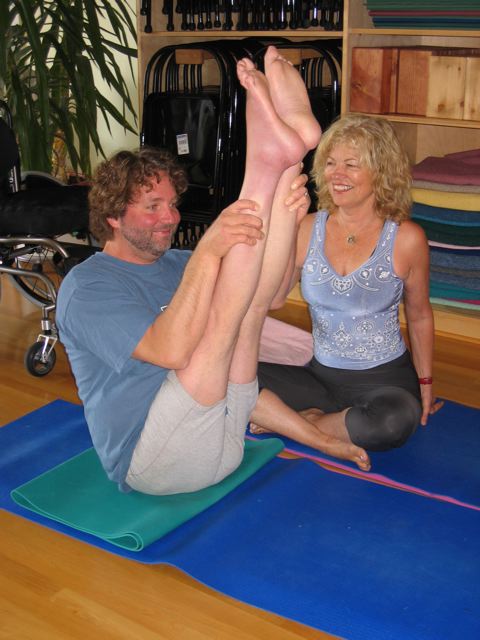
receptive. We worked on alignment sitting in wide legs he got the
idea, then we started talking about the props... oh boy, next thing
I know it's several sand bags, a block or 2, and a couple of
belts!! I could tell we connected..... he loved the idea of working
with his body, and we are both looking forward to the next
session!
I thought about Matt a lot over the next week and what we could do.
One of the things I did do was to try a lot of things myself. Most
of my own practice kind of turned into trying things with Matt in
mind.
I did not try to fix him but I did try to practice as if I could not
use my legs. The really hard part was when Matt said to me "but
you are using your abdominal muscles". Oh, now that was hard or
impossible not to do. I also broke the poses down to very small
bits.... so he could do those pieces of poses.
The truth about "fixing" anybody is we can only suggest things or be
an example. The only person you might fix is you, right? This
is a big topic, it is possible there is too much trying to “fix”, I
try to let people find their own way. I love the part when the
student "gets it". Now how do we put this together? And that
became the story of MindBody Solutions.
Looking back on this is very amazing to me. Matt and I have a very
long relationship now and I am so glad we met that day.
Warmly,
Jo Z.
Matthew Joyce,
"Gone, but Not Forgotten", June 29, 1983 - April 7, 2008
"My name is Matthew
Joyce, a.k.a. Worm. I have Cystic Fibrosis and received a
double lung
 transplant in November of 2000. I came to Jo Zukovich, about a year after my operation, asking for help with
breathing techniques to help while surfing and other activities.
Jo has taught me several ways to help open airways and stay relaxed.
It's a proven fact that being more relaxed, and more intuitive with
your mind and body, the easier it is to breath. Jo has donated
her time to meeting with me on a regular basis to go over the
different techniques that she has taught over the years. I
really think she has helped me get through the ups and downs of my
breathing, and has definitely improved the quality of my life."
transplant in November of 2000. I came to Jo Zukovich, about a year after my operation, asking for help with
breathing techniques to help while surfing and other activities.
Jo has taught me several ways to help open airways and stay relaxed.
It's a proven fact that being more relaxed, and more intuitive with
your mind and body, the easier it is to breath. Jo has donated
her time to meeting with me on a regular basis to go over the
different techniques that she has taught over the years. I
really think she has helped me get through the ups and downs of my
breathing, and has definitely improved the quality of my life."
Matthew Joyce
Big Worm's Cystic Fibrosis Life Foundation
www.bigwormscff.com
Dino Andino ...
"I
have to first start by saying I met Jo about ten years ago, I
was going through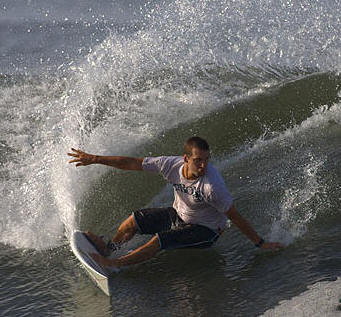 some very difficult times both physically and
mentally, and through Jo's workings and believing that I could
and would heal, which by the way she helped instill in me, I got
through it and have been healthier since. So thanks a
million Jo!!!!!!!!!!!! On that same note, when I think
about Jo's voice, it is like having her enlighten me all over
again. I really start thinking of how special her
knowledge really is. Jo, you are a blessed person and you
are the chosen one to do the GOOD work out in the world.
How you teach physical movements through Yoga, I personally
think that it is more then just physical and it actually had a
spiritual impact in my life. Thanks for sharing your
knowledge with the world and more importantly, caring.
Keep in touch.
some very difficult times both physically and
mentally, and through Jo's workings and believing that I could
and would heal, which by the way she helped instill in me, I got
through it and have been healthier since. So thanks a
million Jo!!!!!!!!!!!! On that same note, when I think
about Jo's voice, it is like having her enlighten me all over
again. I really start thinking of how special her
knowledge really is. Jo, you are a blessed person and you
are the chosen one to do the GOOD work out in the world.
How you teach physical movements through Yoga, I personally
think that it is more then just physical and it actually had a
spiritual impact in my life. Thanks for sharing your
knowledge with the world and more importantly, caring.
Keep in touch.
Dino
Andino
Professional Surfer,
Surf Academy and
Billabong
Margaret
Westley ...
The first
moment I laid eyes on Jo Zukovich, I had an "aha" moment. I
had flown to a yoga conference to work specifically with her and her
student, Matthew Sanford. Haven continued a yoga practice
after losing my left leg to a traumatic bus accident four years
prior, left me hungry to learn as much as possible about adaptations
I could make to my personal practice. What I received from
that weekend far surpassed my expectations. Not only did I
gain insight to how I could modify traditional asanas, but for the
first time since beginning my practice I encountered the presence of
a person who challenged me to step out of the norm and begin to
"feel" the pose as if I were contorting my body into a fine piece of
art. Embodiment is a concept I think about every time I have
the privilege to work with Jo. When she is teaching, her love
of yoga emanates from her very soul; stressing the importance of
breath and personal inquiry as one practices. Jo never fails
to help as many of her students as she can; digging around the prop
room (while continuing to teach!) to see if there is a belt, block,
sand bag, or tinciest piece of cloth that will help the individual's
experience. Jo's classes are challenging. Uplifting.
And, most importantly fun. Never failing to suggest we smile
while we hold our fiftieth down ward facing dog! More then
anything. It's been a blessing to share the very space with
her.
Margaret
Westley
Janet Langley ...
"When I first started
doing yoga, I went to classes to escape what I realize now was a low
level depression. After meeting Jo, and becoming her student, I
learned to appreciate all aspects of my life and the world -- even
the difficult parts -- as I learned also to appreciate how my body
works, and how my mind, thoughts and body interact. Thanks to Jo’s
diligent guidance, infectious love of life, and unwavering devotion
to yoga, I found the courage to live fully with my eyes open."
Janet Langley
Certified Iyengar Instructor, owner of Rose Yoga Center, Medford,
Oregon
www.roseyogacenter.com/yoga_intro.htm
Jeff Pastore ...
"After a few false
starts at taking up Yoga, I was introduced to Jo Zukovich and her
flavor of Iyengar Yoga. Having visited several studios I'd
been introduced to a variety of styles and teachers. Jo was by
far the best. Why? you may ask ... It was her unique ability
to put into words what others couldn't. Jo not only
demonstrated impeccable form, she was able to communicate the
intangible and seemingly esoteric aspects of the art that made it
click for me.
That and her positive vibe and wealth of knowledge of the practice
just make it a joy to go to Yoga.
Thanks Jo!"
Jeff Pastore
Broker
Ann Clark ...
"A casual student
of Yoga for many years—off and on—I came to the SD Yoga Studio in
1976. I was converted immediately to being a regular student.
Jo and her wonderful instructors, including hubby Mike, were the
most skillful, empathetic, and eclectic group I had ever
encountered. By eclectic I mean all wonderfully skilled in the
Iyengar method and poses, extremely committed, good teachers, and
each unique in his or her own style and method. It made for a
constantly challenging regime of classes. Classes with Jo herself,
however, were always the most challenging. Later, Jo did a
series of lunch-time seminars for my company’s corporate clients and
she was a huge hit. She is especially skilled at taking people
just where they are — no matter how chubby, out of shape, stiff,
etc. — and making them feel like that is a perfect place to start
yoga. Not an easy feat in a corporate setting over the lunch
hour!
In all these years she
has not changed. She is incredibly skillful as both a
practitioner and teacher, passionate and committed to her own
practice of yoga,and a wonderfully compassionate human, being and
doing. My last comment to her was that she should put more
pictures of herself on her website as she is beautiful to watch as
well as to learn from. I hope that anyone reading this will
jump at the opportunity to experience Jo Zukovich in class, through
her website or as a friend. Those of us who are lucky enough
to have her in our lives are truly among the most fortunate, and the
most blessed."
Regards,
Dr. Ann D. Clark
CEO and Chairwoman of the Board
ACI Specialty Benefits
www.acispecialtybenefits.com
Vicky
O'Riordan ...
After studying with Jo Zukovich for the past 8 years I can say
she is an extraordinary teacher. Her dedication to the practice
of Yoga, to her own teacher B.K.S. Iyengar, and her students is
the motivating force in her teaching. Her classes are
instructive, enlightening, powerful, intense and fun. What makes
Jo such an authoritative and influential teacher is the way she
communicates to her students what she has personally learned
through her 30 years of doing yoga. Jo brings this active and
ongoing knowledge to every pose she breaks open for her
students. Her deep love of yoga shines through as Jo examines
each pose with both joy and enthusiasm. Jo continually searches
out the best way for her students to personally realize their
own poses.
As a teacher Jo pulls together all the classical modes of
learning in a meaningful way. Jo combines the actions of seeing,
hearing and doing so her students can come to understand the
pose on the deepest level. In addition she often recounts
stories of the Hindu gods who have inspired certain poses to
give her students yet another level of understanding of the pose
itself. Jo constantly encourages and inspires her students using
multiple forms of engagement. As she demonstrates a pose Jo will
discuss the finer points of alignment as well as the essential
mode of the pose; heavy, light, large, small, masculine,
feminine, etc. and in this way her students begin to understand
the asanas as both physical and mental.
Her extraordinary ability to inspire her students to be the best
they can is matched by the subtleness of her individual
instruction. Sometimes towards the end of a class she has given
her students information on so many different and insightful
levels that a light touch of her finger will cause her student
to realize a profound shift of the muscle here, the skin there.
Jo is truly an amazing person and teacher.
Vickie O'Riordan, Images Curator
Head, Technical & Digital Services
Arts Library, University of California, San Diego
Vice President, Visual Resources Association
Sarah Eberst ...
There are so many aspects of Jo's workshop in Portugal to
recommend --- the camaraderie, the wonderful classes, the great
food and beautiful setting to name just a few. But I think I had
two experiences as a result of the workshop that I want to
share. The first was during the week itself. By about Wednesday,
I noticed a difference in my savasana. For the first time, in
over eight years of practice, I think I really experienced the
pose. Being away from work, the internet, the television and
radio and having the chance to practice with Jo twice a day
allowed my brain and body to really experience the relaxation
that the pose offers. It was a pretty cool moment of discovery.
The other aspect was what I discovered once I returned home to
San Diego and my regular life. You know how so often we come
back to work from a vacation, and within a couple days we find
ourselves right back at the same level of stress? Well, not this
time. The sense of peace and well being I had during the
workshop has stayed with me, and I find myself, five months
later, still enjoying the benefits of that week at Casa Mimosa.
I can't recommend the workshop enough.
Sarah Eberst
Lori Magana
...
I
had the good fortune of meeting and studying with Jo Zukovich
during the summer of 2008. After having been inspired by Matt
Sanford, and realizing a new vision for my work as a physical
therapist and yoga teacher, I knew I had to learn and study
Iyengar yoga. Matt suggested I study Iyengar yoga with someone
"kind and loving". A few weeks later, I flew to Minnesota to
meet Jo, when I took my first weekend Iyengar workshop with her
at MindBody Solutions.
Even though I have taught hatha yoga for 5 years, Iyengar was
new to me, and the thought of this new experience was
frightening. Jo immediately put me at ease! In an instant, I
felt at home with her and her teaching. She created a safe place
for me to explore and grow. I felt so comfortable with her, I
wanted to study with her more intensively. So, during the summer
of 2008, I flew from West Virginia to San Diego to study with
her on two different occasions. I combined all levels of Iyengar
classes at SDYS with private lessons with Jo, so that I could
understand better and experience the principles of Iyengar yoga
and alignment, knowing that this would translate into my work
with those with disabilities.
I learned so much! Because of my time with her, my personal
practice has changed, my teaching has changed, and I feel more
confident in my ability to teach yoga to all bodies.
Jo's wisdom, kindness, and open heart have inspired me. I am
lucky, not only to consider her one of my honored teachers, but
also a friend.
Lori Magana
Physical therapist, certified yoga therapist
Charleston, WV
www.radiantlotusyoga.com
Matthew
Sanford - of Jo's many students: http://mylifeyoga.com/2012/06/02/unthinkable-is-possible/
LA Yoga Magazine; Graceful, Light and Tuned
In, By Yvonne Pesquera, March 2007, Vol. 6/# 2, ...
Teacher Profile:
Jo Zukovich
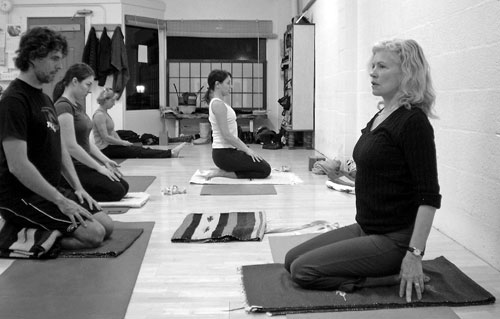 A teacher once
told Jo Zukovich: “You won’t understand the value of
teaching until you’ve been teaching for 20 years.” At
the time, Jo couldn’t imagine what fruits her teaching
career would bear in the future. But now that she’s been
teaching for 20 years, Jo understands. She sees the
nature of our physical beings, and describes our bodies
as tiny universes, as beautiful and vast as the outer
universe we live in.
A teacher once
told Jo Zukovich: “You won’t understand the value of
teaching until you’ve been teaching for 20 years.” At
the time, Jo couldn’t imagine what fruits her teaching
career would bear in the future. But now that she’s been
teaching for 20 years, Jo understands. She sees the
nature of our physical beings, and describes our bodies
as tiny universes, as beautiful and vast as the outer
universe we live in.
The practice of yoga has been
a steady companion in Jo’s life. She remembers practicing in 1968 –
the year her first child was born, and the year Martin Luther King,
Jr. and Robert Kennedy were both assassinated. She embraced the
practice of yoga as an art form, so she became a serious student and
started teaching full-time.
Jo acknowledges that yoga
classes were simpler in those days: they usually consisted of only
12-15 poses and were held at a YMCA or in someone’s living room. But
Jo’s unwavering dedication to practicing and studying placed her
firmly on the path to becoming a certified Iyengar teacher.
“Fifty percent of what I know
I’ve learned from my students.”
On one of her first trips to
India to study with B.K.S. Iyengar, Jo was struck by the realization
that yoga is a wide-ranging subject. She thus returned to India
several times to continue studying with the Iyengars.
In 1990, Jo and her husband,
Mike Zukovich (also a yoga teacher), opened the San Diego Yoga
Studio. This was at a time when yoga studios were not part of the
local business landscape. In fact, the landlord was so cautious; he
wouldn’t rent to them until he first visited one of their yoga
classes.
As Jo’s teaching career
matured, new students streamed into her life. Even though all
students impact the teacher, one student, in particular, taught Jo
the most she has ever learned about yoga.
Matthew Sanford was a graduate
student at the University of California Santa Barbara when he was
first introduced to Jo. He had been paralyzed from the chest down at
the age of 13 in a car accident. Reminiscent of how yoga was taught
for thousands of years, Jo worked with Matthew on a one-on-one
basis.
Matthew recalls that Jo would
practice as if she were paralyzed in order to visualize the core of
his pose. As the teacher of a paraplegic student, Jo was
compassionate, open and creative – without trying to “fix” his
disability. They didn’t work on perfecting poses, especially since
some (such as standing poses) are impossible for Matthew. Instead,
Jo helped him cultivate a presence within his body through
awareness, breath and attention.
“Jo’s instructions
reverberate throughout the studio like a low hum under the
breath of a yoga practice.”
Without question, teaching a
student who is paralyzed from the chest down requires thinking about
yoga and teaching at a different level. It requires a teacher who
knows the deeper practices of yoga. Matthew found that Jo had enough
awareness to allow him to proceed at his own pace and that her ego
was not invested in his progress. Matthew was so inspired by Jo’s
grace, joy and respect that he decided to teach yoga to people with
disabilities.
About this process, Matthew
says, “You have to feel that yoga doesn’t discriminate. Iyengar yoga
allows us to see the components to adapt (at the core), so you can
have a mind-body relationship. Jo’s very good at letting yoga be a
process. Over time, yoga unfolds benefits. If I hadn’t learned that
[from Jo], I wouldn’t be able to teach students with disabilities
today.”
Matthew wasn’t the only one
unchanged by the experience of working together. “Fifty percent of
what I know I’ve learned from my students,” said Jo. “[I’m
reminded,] I have so much to learn, work on and practice. I’m never
bored.”
The students in Jo’s regular
group classes know they are in the presence of a master teacher. Not
because her class is “better” than anyone else’s. It is because her
teaching approach is light and graceful, yet always tuned in. Her
words are ideals that inspire students and uphold a higher vision to
which they can aspire. When she speaks, Jo’s instructions
reverberate throughout the studio like a low hum under the breath of
a yoga practice.
Yvonne Pesquera is a
freelance writer in Carlsbad, California.
yvonne@pesquera.net
All Rights Reserved.
Copyright © 2002-2006
LA Yoga Ayurveda & Health Magazine
Para Quad News; Health
& Sports by Margo Marchbank, May 2007
"What makes a
successful sportsperson? Physical capacity obviously – being blessed
with fast twitch muscles if you’re a sprinter; Thorpedo’s size 17
power paddles; short legs and a long torso for weightlifting. But
then there’s that less quantifiable something – a combination of
tenacity, endurance, the desire to win – mental capacity.
ParaQuad News
this issue looks at health and sport. And in doing that, we examine
some interesting perspectives on the relationship between that
physical capacity – the body; and mental capacity – the mind.
This relationship
between body and mind is a critical one, according to American yoga
teacher and founder of the
non-profit organization, Mind Body Solutions, Matthew Sanford.
Now aged 41, Matthew became a T4-6 paraplegic at the age of 13 in a
devastating car accident, which also caused the death of his father
and older sister.
A keen sportsman
before his accident, playing basketball as a young seventh grader in
a team made up of older ninth graders, after the car crash he feels
separated from his paralyzed body. He has a sense of "anger and
disgust", with a body which he describes as feeling "foreign and
full of pain". In Waking, his book published last year, Matthew
writes of a slow waking over many years – to the ability to relate
to his body, with the help of people such as Carole. "She shows me –
through my body – how to relate to the physical and mental trauma
that I hold", he writes. "Of course, the trained philosopher in me*
is skeptical, but over time, he too must sit back and observe the
awareness that begins to unfold through my body." (*After beginning
a law degree, following in his father’s footsteps, Matthew switched
to philosophy, undertaking postgraduate studies.)
This gradual
waking led him, in 1991, with considerable trepidation, to attend
his first yoga class. "I had no idea what to expect, no idea if yoga
was even possible for a paralyzed person." Together Matthew and
intuitive teacher Jo explored Iyengar yoga, adapting poses, and
finding out what Matthew describes as the ‘possibilities of yoga and
paralysis’. In the west, the word yoga is often used to refer to
Hatha yoga, of which Iyengar is one school. Iyengar yoga emphasizes
posture, and the development of balance and alignment. It also makes
use of props: blocks, pillows and balls. "Props are fabulous for
anyone with a disability," Matthew says. "Iyengar is great because
it does individual poses: breaks them down more, and maximizes the
level of mind-body integration. There are a lot of poses in other
styles of yoga I can’t do – the flowing style, for example." (This
style of yoga is called Ashtanga, and links a series of poses into a
single flow.)
T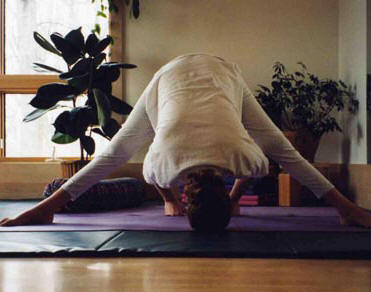 here’s
also a school in the United States which teaches ‘chair yoga’ for
people with disabilities, but Matthew says, while not dismissing
that approach entirely, recognizing it is suitable for some people,
says, "there’s only so much yoga you can do in a chair. Freedom for
me was getting out of it – you need to go beyond the chair."
here’s
also a school in the United States which teaches ‘chair yoga’ for
people with disabilities, but Matthew says, while not dismissing
that approach entirely, recognizing it is suitable for some people,
says, "there’s only so much yoga you can do in a chair. Freedom for
me was getting out of it – you need to go beyond the chair."
On a practical
level, Matthew argues the benefits of yoga practice, for all people,
but especially those with a disability, are "increased balance and
strength, and a greater sense of well being". Over time, he
explains, you develop "ways for the mind to move through the body
which are not related to muscle movement. It’s not going to make you
walk, but you will have a new experience if you ‘listen’ – the level
of sensation is much more subtle."
Matthew teaches
yoga in his home state of Minnesota, but only about a quarter of his
students are people with SCI.
"There’s
a real push for people with SCI to become involved in athletics," he
says, "using the ‘will’ to overcome disabilities. I tend to stay
away from words like ‘overcome’ because it’s still tied to the
concept of a ‘damaged’ body."
"That’s all great
stuff, (athletics), but it’s much more important for your quality of
life to learn how to listen to your body: the ‘silences’. My goal is
to empower people with disabilities to have some sort of mind-body
practice."
"Current
rehabilitation practice treats SCI as a physical injury alone,"
without considering the balance of body and mind, so as well as
teaching, Matthew is a frequent traveler around the United States,
giving lectures to health professionals on integrative health. "He
argues passionately that "minds and bodies work better together: you
don’t want to have a mind which is at odds with your body. Mind and
body – it’s an incredibly powerful combination," he concludes...."
Article is
courtesy of Para Quad News,
www.paraquad.org.au,
click here for a copy of the article
Para Quad News Health & Sports
Positive Thinking Magazine, Mar/Apr 2008
Download pdf